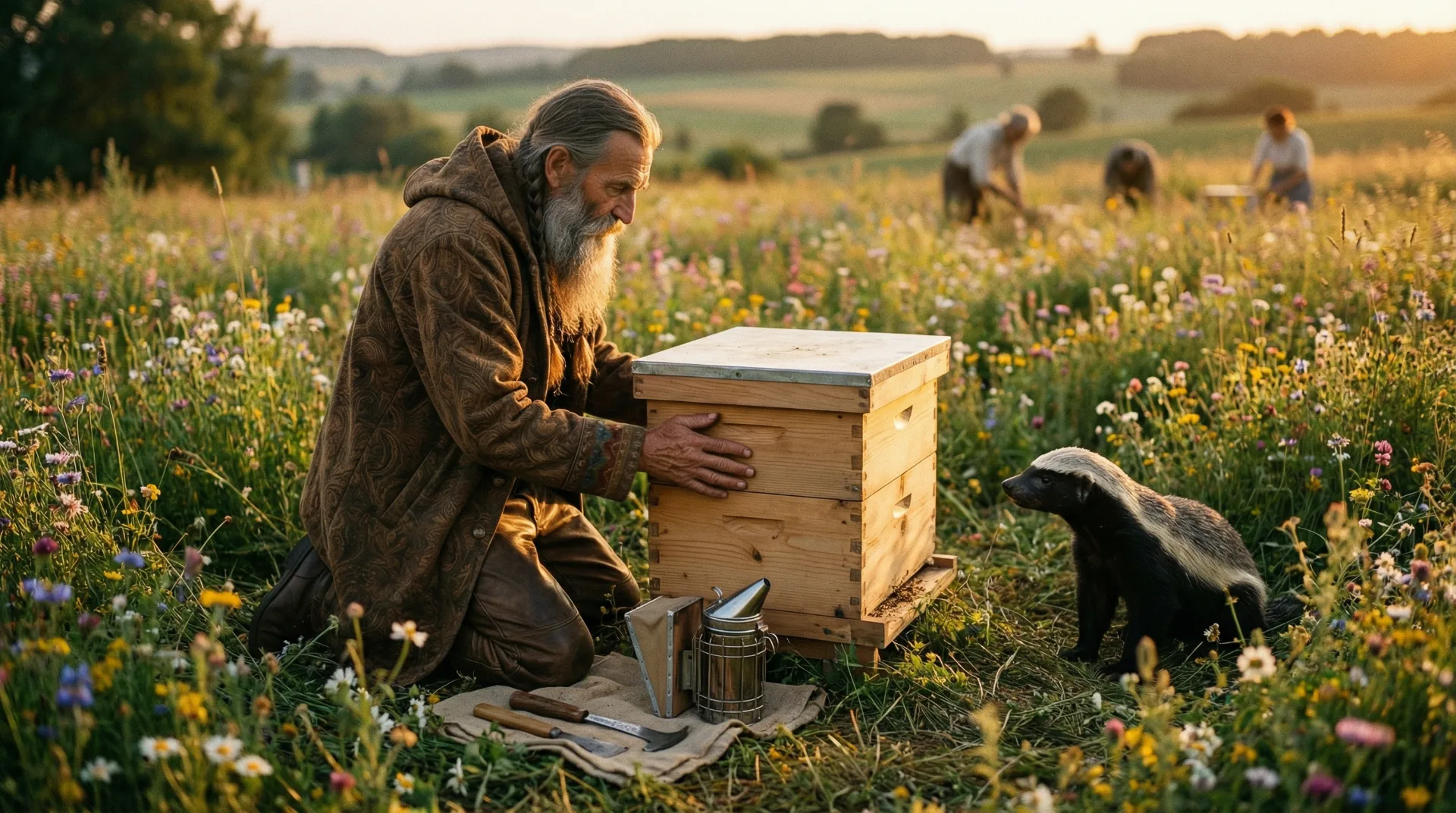
How the Hive Teaches Us to Build
Regeneration as Biomimicry, Systems Thinking as Sacred Practice
Sustainability has always asked:
"How can we reduce harm?"
Regeneration asks something higher:
"How can we create more life?"
The Fifth Ferment answers not with models, but with bees.
The hive is the perfect regenerative economy:
- It extracts nectar but leaves pollination
- It grows strong only when the flowers flourish
- It feeds itself by feeding the field
- It expands only when it can seed another hive
This is the operating model we must learn from.
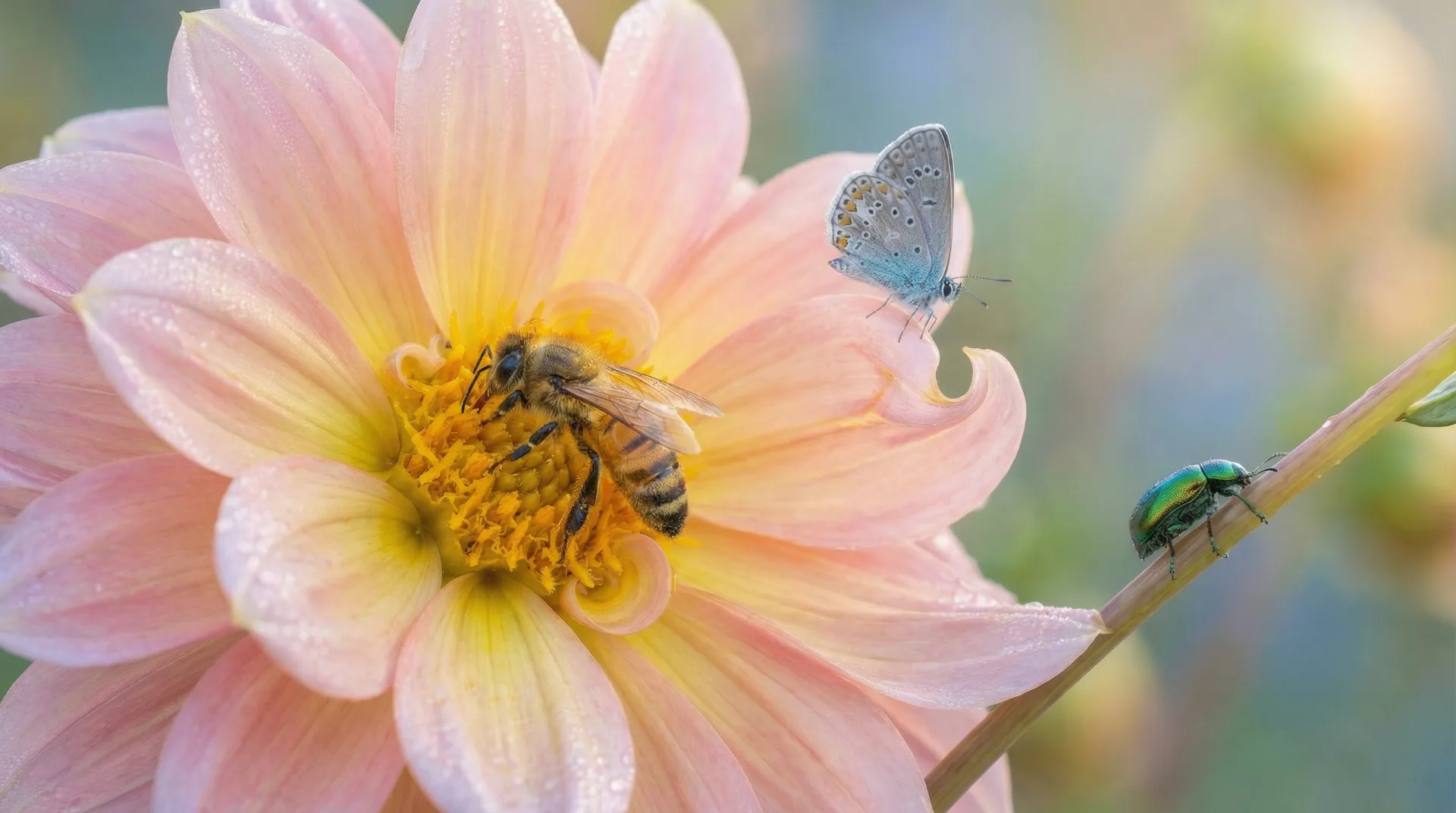
Leading with Desire, Delivering with Impact
Too many sustainability efforts begin with guilt.
The hive begins with longing — for energy, vitality, clarity, connection.
When we lead with flavor, performance, and aliveness, each purchase steps into an ecosystem of regeneration:
- Bee bread purchases support smallholder beekeepers and native species
- Demand for bee forage drives pollinator-friendly landscapes
- Scale creates incentives for flower-rich diversity, not monoculture
- Quality standards support chemical-free zones
- Hive-centric economics fuels soil restoration and local livelihoods
The hive doesn't have a carbon offset program. It is an offset program — with wings.
Real Food That Builds Real Soil
Hive fermentation can only happen where ecosystems thrive.
The healthier the fields → the more nutrient-dense the pollen
The more biodiverse the flora → the more complex the bee bread
The richer the bee bread → the more powerful the product
By growing demand for hive-fermented food:
- We create incentives for restorative farming
- We give native plants economic value again
- We allow bees to thrive in human systems, not just wilderness
- We build flavor as feedback — where ecosystem quality can be tasted
It's terroir meets pollinator logic — a fermented ecosystem in a jar.
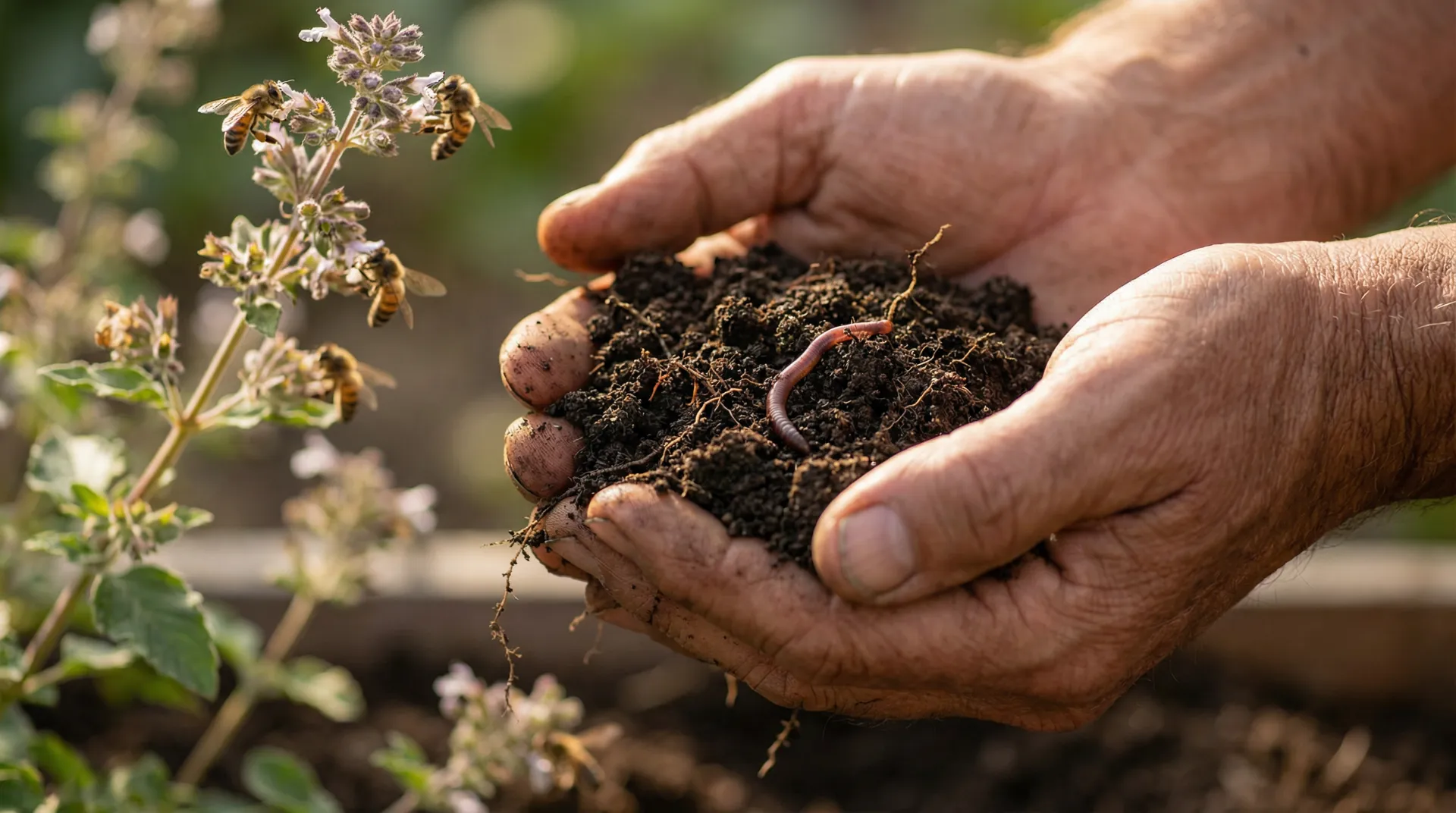
The Hive as Regenerative Business Model
The hive teaches us to build differently:
Biomimicry principles from the hive:
- Distributed intelligence — No CEO bee. Local decision-making, emergent coordination
- Redundancy as resilience — One queen dies? The hive raises another. Flexibility over centralization
- Feedback loops over forecasts — The hive responds to real-time signals: temperature, pollen availability, threats
- Investment in future generations — Bees ferment food for larvae they'll never meet
- Symbiosis over competition — The hive doesn't fight the flowers. It serves them. And thrives.
This is not inspiration. This is instruction.
From Theory to Practice
When you support hive-fermented food, you are:
- Maximizing your own life force
- Eating like the earth matters
- Building like a bee builds
- Regenerating soil through appetite
- Becoming part of a system that multiplies vitality
You don't have to understand the model to join it.
You just have to taste the ecosystem.
And then let it grow through you.
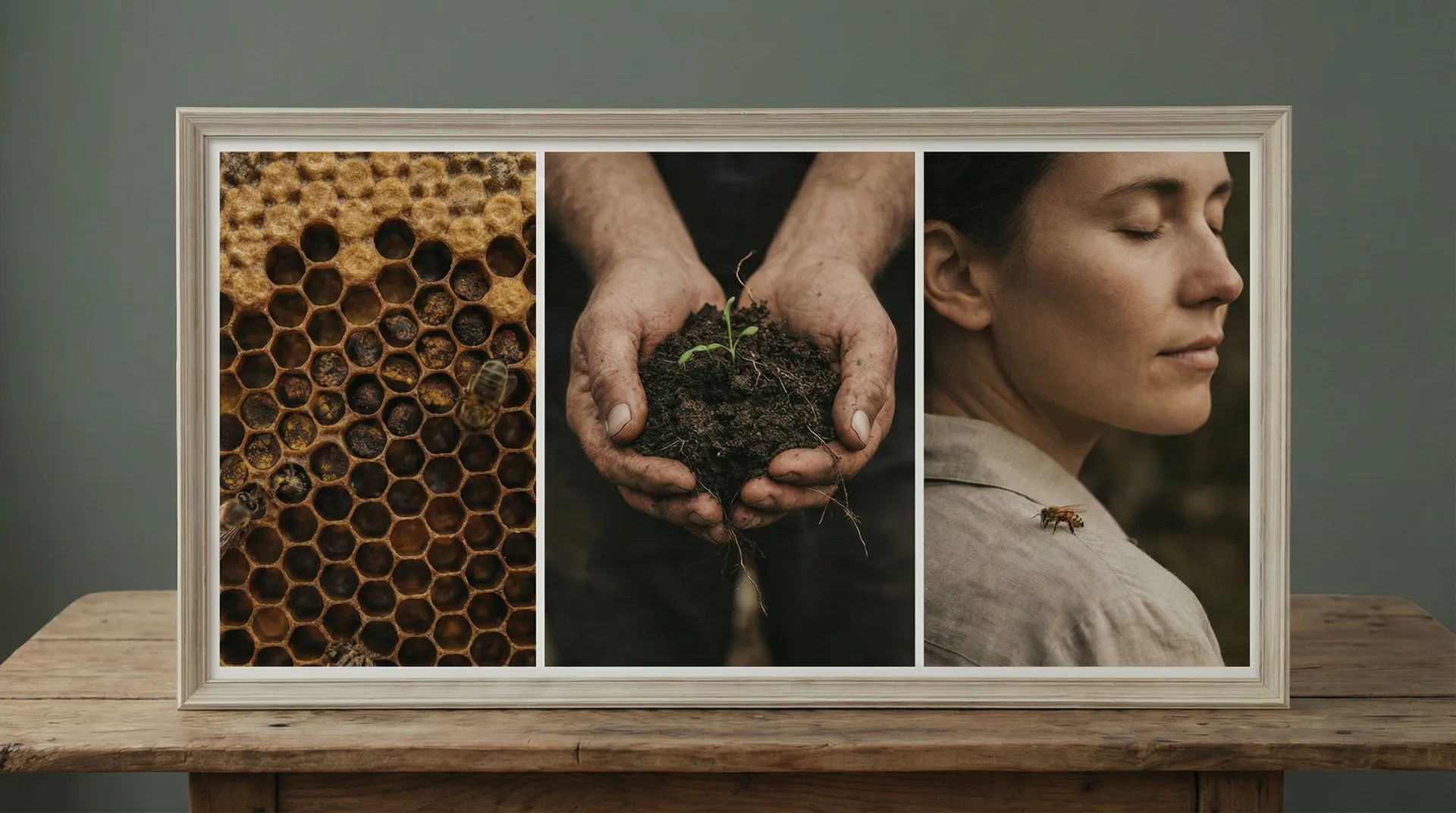
From Hive to Soil to Soul
This is not just about selling a product.
This is about remembering how to build:
- With patience, not urgency
- With systems, not shortcuts
- With life, not extraction
- With love, not leverage
The hive has been teaching this for millions of years.
We're finally learning to listen.
And when we do, we discover:
The way forward is the way home.